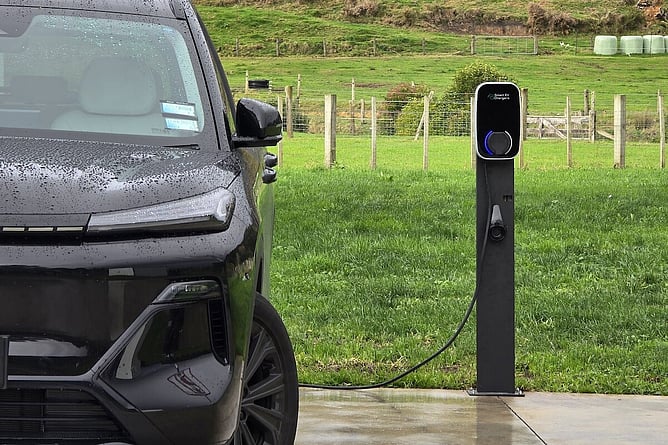
With fuel prices rising and more EVs on New Zealand roads, more homeowners are asking the same question:
“Can I charge my EV using solar?”
The short answer:
Yes — and for many homes, it works surprisingly well.
At Alectrics, we’re seeing growing interest in EV chargers, solar systems, and smarter home energy setups across Hamilton and the Waikato.
Here’s how charging your EV with solar actually works, without the confusing jargon.
Can Solar Panels Charge an EV?
Yes.
Your solar panels generate electricity during the day, which can then be used to power your home — including charging your electric vehicle.
In most homes, solar power works like this:
Solar powers your home first
Any excess energy can charge your EV
Additional power comes from the grid if needed
This means your car can effectively be charged using the sun during daylight hours.
Do You Need a Battery?
No — and this is one of the biggest misconceptions.
You do not need a home battery to charge your EV with solar.
Many New Zealand homeowners simply:
charge during the day
use excess solar production
reduce how much power they buy from the grid
A battery can improve how much solar energy you use at night, but it isn’t essential for EV charging.
What Happens at Night?
At night, your EV charger will simply use grid power like normal.
Some homeowners combine:
solar
off-peak power rates
smart EV charging schedules
to keep charging costs low both day and night.
How Many Solar Panels Do You Need?
This depends on:
your EV
how much you drive
your solar system size
when you charge
As a rough example:
Smaller EVs
Vehicles like a Nissan Leaf use less energy and are easier to offset with solar.
Larger EVs
Larger EVs or high daily driving distances may require bigger systems to significantly offset charging costs.
The good news:
👉 most people don’t need enough solar to cover 100% of their driving to see worthwhile savings.
Is Charging an EV With Solar Worth It in NZ?
For many homeowners — yes.
Especially if you:
already have solar
are considering solar
drive regularly
charge at home often
The biggest benefits are usually:
lower running costs
reduced reliance on fuel
using more of your own generated power
future-proofing your home
What’s the Best Time to Charge?
Daytime charging is ideal if you want to maximise solar use.
Many homeowners:
plug in after arriving home
schedule charging during sunny periods on weekends
or use smart chargers that prioritise solar generation
Smart EV Chargers Make a Big Difference
Modern EV chargers can do far more than simply “plug in and charge.”
Smart chargers can:
schedule charging times
monitor power usage
prioritise solar energy
help avoid overloading your home
This becomes especially useful when combining:
solar
EV charging
batteries
ducted heating systems
or high-powered appliances
Do You Need 3-Phase Power?
Not always.
Many homes can comfortably charge EVs using standard single-phase power.
However, some larger chargers or homes with high electrical demand may benefit from 3-phase upgrades.
This depends on:
your charger
your switchboard
your overall household load
What About Winter or Cloudy Days?
Solar systems still generate power on cloudy days — just less than during peak sunshine.
Your EV charger simply uses additional grid power when solar production is lower.
That’s why most setups are designed to:
👉 reduce charging costs
not necessarily eliminate them completely.
The Premium Setup: Solar + EV Charging + Smart Home Energy
More homeowners are now thinking about their homes as complete energy systems.
Combining:
solar
EV charging
smart energy monitoring
batteries
and efficient heating
can dramatically improve:
running costs
energy efficiency
convenience
long-term home value
Common Misconceptions About EV Charging & Solar
“You need a battery”
No — batteries are optional.
“NZ weather makes solar pointless”
Modern solar systems still perform well in New Zealand conditions.
“Solar can fully charge any EV”
It depends on your system size and driving habits.
“EV charging will overload my home”
Modern chargers can be configured to safely manage household demand.
Is It Worth Installing Solar Just for an EV?
Sometimes — but it depends on your driving habits and energy usage.
For many homeowners, EV charging becomes the reason they finally decide to invest in solar because they’re already using more electricity at home.
Thinking About EV Charging or Solar?
At Alectrics, we help homeowners design practical setups that work for how they actually live.
Whether you’re:
installing your first EV charger
considering solar
or planning a smarter home energy setup
we can help you understand your options.

